
Are Fire Extinguishers Bad for the Environment? Understanding PFAS and Sustainable Alternatives
A major shift is happening in the fire safety industry, PFAS extinguishers are being banned, phased out and urgently replaced.
But why, and what does it mean for the extinguishers you’re still using?
Fire extinguishers are essential for safety. A single extinguisher discharge is nothing compared to the carbon impact of a major fire. Yet at the same time, we’re discovering that many of the extinguishers we rely on contain PFAS ‘forever chemicals’ and other additives now known to be harmful to the environment, wildlife, and even human health.
This growing awareness is creating a major shift in the fire safety world. Across the UK and Europe, PFAS-based firefighting foams are being phased out, new regulations are tightening, and water companies have been instructed to reduce PFAS levels in drinking water for millions of people. Change is no longer optional; it’s already happening.
So what does that mean for the thousands of businesses still using traditional foam extinguishers as part of their everyday fire safety equipment?
In this blog, we’ll break down:
Why many current extinguishers are environmentally problematic
Why disposing of old foam units is expensive, complex and energy-intensive
Why even the new “eco” or “green” foams still rely on high-temperature incineration
And what the only genuinely eco-friendly fire extinguishers actually are.
By the end, you’ll understand not just what’s being banned, but what will eventually replace it.

What’s the environmental problem with traditional fire extinguishers?
PFAS and “forever chemicals” in foam and wet chemical extinguishers
Many conventional fire extinguishers, including foam, water with additives and some wet chemical units, use fluorosurfactants, a subset of PFAS (per- and polyfluoroalkyl substances). PFAS are a group of thousands of man-made chemicals famous for three main reasons:
They don’t break down in the environment, hence the nickname “forever chemicals”.
They travel easily through soil and water, contaminating rivers, groundwater, and eventually drinking water supplies.
They are associated with serious human health concerns and pose health risks, including impacts on the immune system, hormone disruption and increased risk of some cancers.
AFFF (Aqueous Film Forming Foam), used in many Class B foam extinguishers, has been highlighted as a major source of PFAS contamination globally. Historic use of PFOS-based foams has already left a legacy of soil and groundwater contamination in the UK.
Every time these foams are used, whether in a real fire, during training, or just in testing, some of these chemicals can be washed into drains or soakaway systems, ultimately making their way into rivers and aquifers.
Recent analyses have shown PFAS above proposed safety limits in almost all English waters tested, including banned PFOS in fish at extremely high levels.
So yes, many existing fire extinguishers, as currently specified, are bad for the environment, not because we shouldn’t put fires out, but because of what’s inside those cylinders and where it ends up.
It’s not just foams
Foam is the worst offender from a PFAS perspective, but other extinguishers have their own environmental downsides:
Powder extinguishers, often referred to as dry chemical fire extinguishers, can leave corrosive residues that are difficult to clean up and can damage equipment and surfaces, with polluted run-off heading into drains.
CO₂ extinguishers release a greenhouse gas directly into the atmosphere (though they don’t cause the same persistent contamination as PFAS).
Water with additives and Wet chemical units often contain additives that must not enter watercourses in significant volumes.
That’s why regulators are now focusing first on PFAS, the most serious long-term threat, and why the industry is being pushed to rethink its default choices.
PFAS bans: why foam extinguishers are being phased out
UK and EU regulations are tightening fast
In the UK, C8 foams containing PFOA are being banned under UK REACH. The transition period for the use of PFOA-based firefighting foams ends in mid-2025, and any fixed system or portable extinguisher using PFOA-based foam must be replaced by that date.
This isn’t yet a blanket ban on every fluorinated foam, but it’s a clear signal of where policy is heading, especially with further PFAS restrictions still under consultation.
At the same time, the EU has adopted new restrictions on PFAS in firefighting foams. From late 2025, PFAS-containing foams will be phased out with specific transition periods, and portable fire extinguishers with PFAS will face restrictions shortly after the rules take effect.
PFAS in drinking water, a wake-up call
The firefighting sector isn’t operating in isolation. Water companies in the UK have been ordered to reduce PFAS levels in the drinking water of millions of people after regulators identified concerns about concentrations.
Combined with government surveillance and mounting evidence of widespread contamination, the direction of travel is obvious: PFAS are becoming politically and socially unacceptable.
So the question isn’t if PFAS-based extinguishers will disappear, it’s how quickly and what replaces them.
The hidden problem: disposing of old foam extinguishers
Once you accept that PFAS-based extinguishers need to go, another problem appears:
Getting rid of them safely is difficult, energy-intensive and expensive.
Why you can’t just “empty them down the drain”
Used or unwanted PFAS foam is effectively classed as hazardous waste. Environmental guidance makes it clear that waste foam must be collected separately and treated using specialist methods, typically high-temperature incineration.
In practice, that means:
Collecting foam from extinguishers, fixed systems and training rigs.
Transporting it to a specialist disposal facility.
Burning it at around 1,100°C for a sufficient residence time to achieve near-complete destruction.
High-temperature incineration facilities are designed to destroy PFAS and related compounds at these temperatures, with regulated emissions monitoring.
Why that’s costly, in money and carbon
HTI is currently the only commercially viable method for large-scale PFAS destruction. But it comes with real downsides:
It’s energy-hungry, requiring sustained operation at extremely high temperatures.
Capacity in specialist facilities is limited, and disposal costs are rising.
If combustion conditions aren’t perfect, there is a risk of forming undesirable by-products and greenhouse gases.
So, while incineration is far safer than allowing PFAS to contaminate water supplies, it still carries a significant environmental and financial cost for businesses.
The new “environmentally friendly” foams: how green are they really?
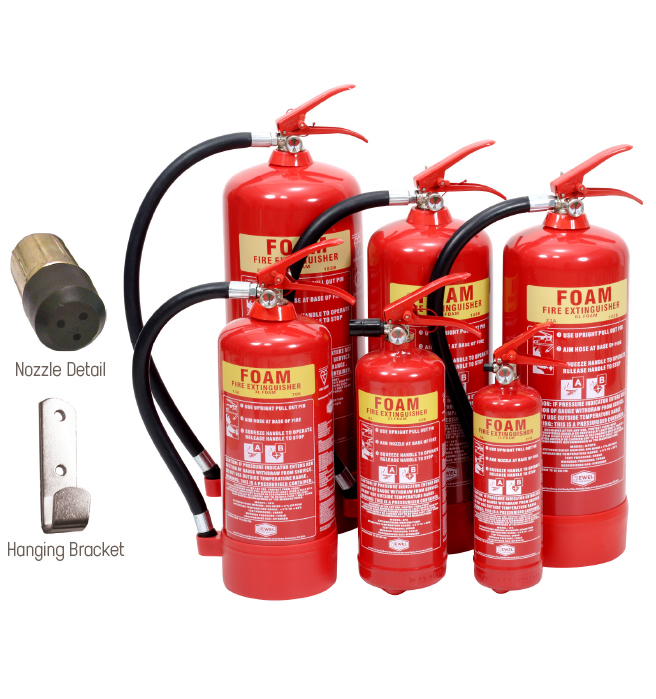
Understandably, the industry has scrambled to offer PFAS-free alternatives. These extinguishers are fluorine-free and provide Class A and B coverage without the “forever chemicals” now under the spotlight.
That’s a genuine improvement in terms of eliminating PFAS, and PFAS-free foams will likely not be subject to the same outright bans.
However, there are some important caveats.
You still can’t pour them away
Even PFAS-free foams are chemical formulations. They contain other surfactants and additives that are not meant to be discharged into drains or watercourses.
Environmental and industry guidance makes clear that foam wastes, including fluorine-free options, still require high-temperature incineration at or above 1,100°C, or another approved disposal method.
Technical guidance also notes that, as water companies come under pressure to keep contamination out of drinking water, it is unlikely that fluorine-free foams will be allowed to be washed down drains either.
The disposal issue doesn’t go away
So, while PFAS-free foams:
Reduce long-term persistence
Avoid the most controversial chemical groups
…they do not remove the need for:
Specialist collection
Energy-intensive disposal
Emissions monitoring
In other words, PFAS-free foam is a step in the right direction, but it isn’t truly “green” when you take end-of-life into account.

Are fire extinguishers bad for the environment, then?
Taken together, it’s fair to say:
Traditional foam, some water additives and wet chemical extinguishers are bad for the environment, primarily due to PFAS and other persistent additives.
Even the newer “eco” foams still require high-energy disposal.
But fire extinguishers themselves are essential; the environmental damage from uncontrolled fires is far worse than that from properly chosen extinguishers.
The real answer is: some extinguishers are far better than others.
Water mist: the only truly sustainable fire extinguisher option
To get away from these chemical and disposal headaches entirely, we need to go back to basics: water.
What is a water mist fire extinguisher?
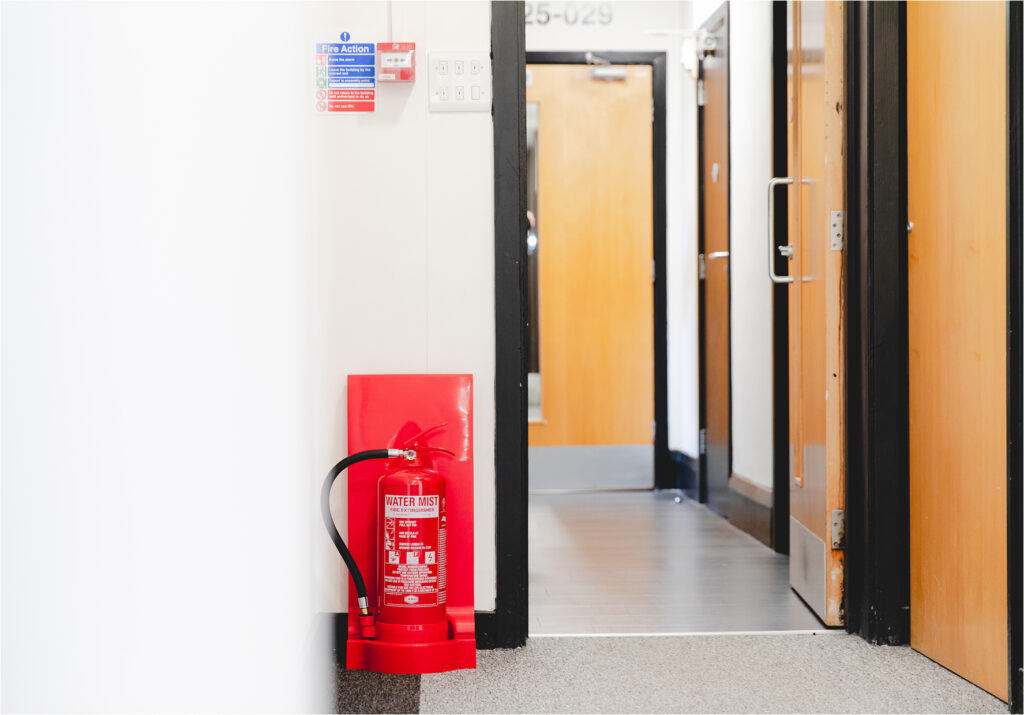
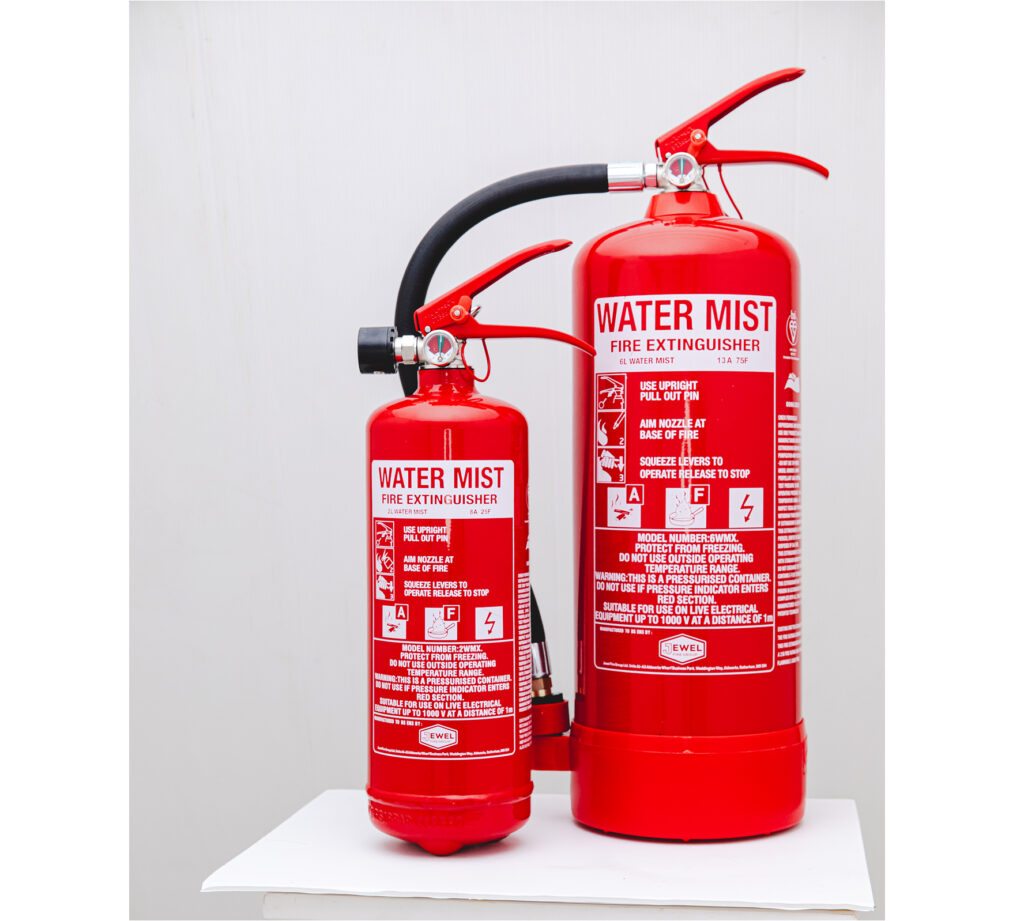
Water mist extinguishers use de-ionised water forced through a specially designed nozzle to create an ultra-fine mist of micro-droplets. This mist:
Cools the fire by absorbing heat
Displaces oxygen close to the flames
Forms a fine “curtain” that can help limit radiant heat and smoke spread
Crucially, high-quality water mist extinguishers, like the Jewel Fire E-Series, do this with no additives whatsoever.
That means:
No PFAS
No fluorosurfactants
No foaming agents, salts or corrosion-promoting chemicals
Just de-ionised water and special pioneering nozzle technology.
Environmental benefits of water mist
Because they only contain purified water, water mist extinguishers are as close to “truly green” as it gets in portable fire protection:
No harmful chemicals are released on discharge; the agent is just pure water, deionised, which returns naturally to the environment.
No contaminated foam or chemical solution to incinerate at 1,100°C later. At end-of-life, you’re mainly dealing with recyclable metal cylinders, not hazardous waste.
Minimal residue, meaning less polluted run-off and easier clean-up after a fire.
Because the Jewel E-Series can be refilled on site, the transport and processing overhead over the life of the extinguisher is reduced.
In short, using water mist instead of foam, water with additives or dry chemical extinguishers removes the PFAS issue entirely and dramatically reduces the environmental burden of both use and disposal.
Safety and performance: not just “green”, but practical
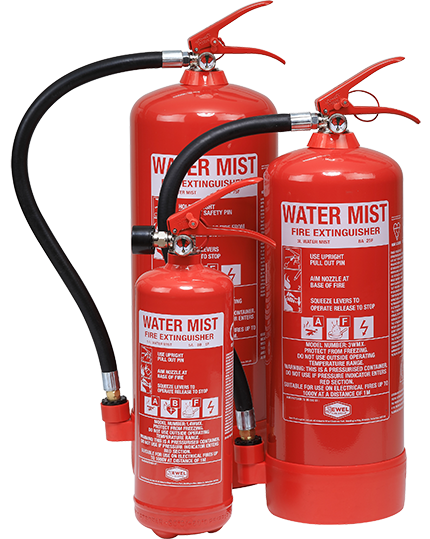
The Jewel Fire E-Series Water Mist range is designed as a multipurpose solution, not a niche product. It can:
Cover multiple fire classes, including Class A, B, C (in some configurations), F, and are safe for use on live electrical equipment, making them suitable for dealing with electrical fires in many indoor environments.
Provide cleaner discharge with no corrosive or toxic residue
Help improve visibility by reducing smoke
Reduce contamination risks, having been tested over several years and confirmed to be safe for use around occupants
They are ideal for internal use and high-footfall environments such as schools, hospitals, hotels, offices, transport hubs and more.
From a practical risk-management perspective, the Jewel Fire E-Series is designed to replace multiple traditional extinguisher types with a single, cleaner, more sustainable option in most everyday indoor environments.
Cost and lifecycle benefits
It’s not just about environmental improvements:
Fewer extinguishers are needed; one water mist unit can often cover the same risks that previously required both a foam and a CO₂ extinguisher.
Simpler training, as staff can learn to use one extinguisher for the most common fire scenarios.
Lower clean-up costs and reduced downtime after discharge, with no powder or foam to remove.
Lower disposal costs at end-of-life, as there are no hazardous chemicals requiring high-temperature incineration.
For many UK organisations, moving to water mist is not just an environmental upgrade; it’s a financially and operationally sensible response to the PFAS phase-out and to the rising cost of disposing of legacy foam extinguishers.
What should UK businesses be doing now?
If you’re responsible for fire safety or ESG in your organisation, here’s a practical roadmap for reviewing your fire safety solutions:
Audit your estate for foam, water with additives and chemical extinguishers.
Check compliance deadlines for PFAS bans and phase-outs.
Stop installing PFAS-containing foams by default.
Upgrade your standard specification to water mist, especially for indoor risks.
Plan responsible disposal of legacy foam extinguishers.
How to Make Fire Protection Truly Sustainable
So, are fire extinguishers bad for the environment?
The answer is: some are far worse than others.
Traditional PFAS-based foams undeniably pose long-term environmental risks, from persistent chemical contamination to disposal challenges that require high-temperature incineration. Even the newer PFAS-free foams are only a partial improvement, still relying on chemical additives and energy-intensive end-of-life treatment.
But that doesn’t mean fire safety and sustainability are at odds.
Modern water mist extinguishers, using only de-ionised water and no added chemicals, offer a way to protect people and the planet at the same time. For most indoor environments, they are the only truly sustainable option: clean, safe, versatile, and free from the environmental burdens associated with foam or powder units.
If your organisation is reviewing its fire safety strategy, whether due to upcoming PFAS regulations, ESG commitments, or simply a desire to reduce environmental impact, this is the ideal moment to consider a shift.
A single change can help you:
Remove PFAS risks entirely
Reduce hazardous waste and disposal costs
Minimise environmental impact across the product lifecycle
Simplify training and equipment choices
Align your fire safety provisions with modern sustainability expectations
For many UK businesses, water mist isn’t just the greener option; it’s the smarter long-term solution.
Ready to transition to a cleaner, future-proof fire safety system?
Explore the Jewel Fire E-Series Water Mist range and see how a single extinguisher type can replace outdated, chemical-heavy alternatives while delivering better protection for people and the environment.

 View PDF