
How to dispose of Fire Extinguishers (and why it’s getting more complicated)
Did you know that the fire extinguisher sitting in your office could soon be illegal to use or cost you money to dispose of?
Across the UK, new environmental laws are clamping down on chemicals hidden inside some extinguishers, the same “forever chemicals” that have been making headlines for polluting our water and soil.
If you’re wondering how to dispose of fire extinguishers safely and how to stay ahead of these changes, you’re in the right place. Let’s break down what’s happening, what it means for your business, and why a switch to water mist extinguishers to cover the appropriate risks might just save you from a costly surprise.
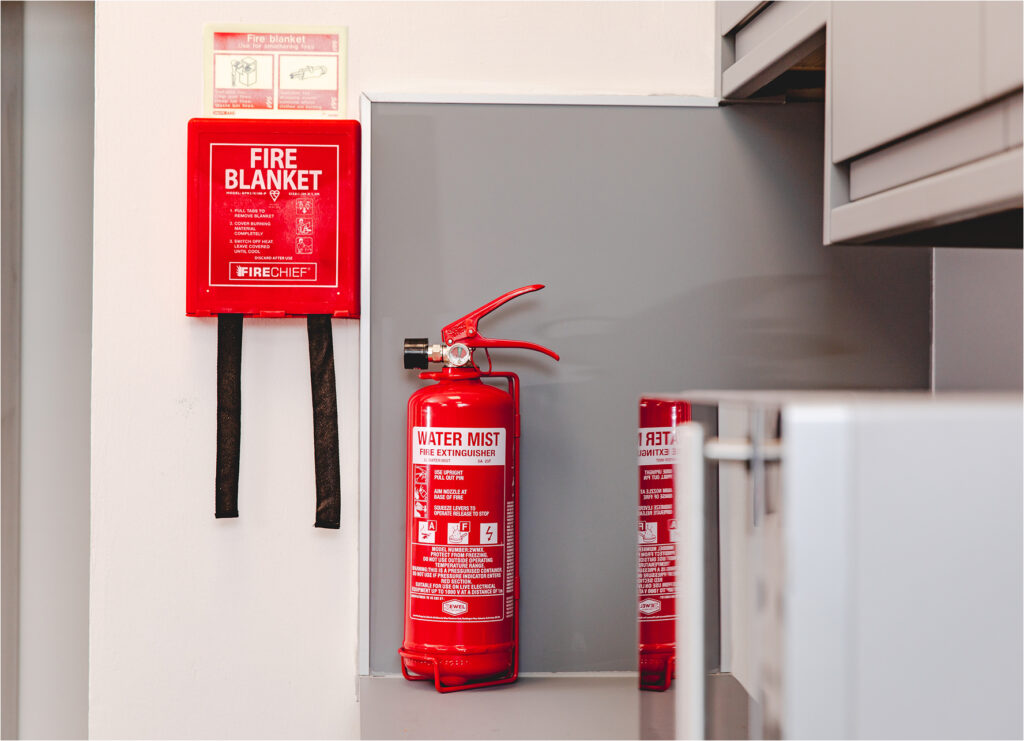
Why You Can’t Just Throw Away a Fire Extinguisher
Think an old fire extinguisher can just go in the skip? Think again.
That “harmless” red cylinder sitting in the corner is pressurised and filled with chemicals and can quickly become a potential threat to safety if you try to dump it like regular rubbish.
That’s why the UK government classifies extinguishers as hazardous waste; they need to be handled with care by professionals who know exactly how to neutralise and recycle them safely.
In short: tossing out an extinguisher isn’t just risky; it will soon be illegal.
The Correct Way to Dispose of an Old Fire Extinguisher
So, you’ve got an old or redundant fire extinguisher lying around, maybe it’s out of date, damaged, or just been replaced. Before you toss it in the skip or drain it out, stop right there.
Disposing of a fire extinguisher isn’t difficult, but there is a right way to do it, and certain steps must be followed to avoid it becoming costly, unsafe, or even illegal. It’s essential to make sure every step is done in the correct manner.
Here’s the correct step-by-step guide to getting rid of one safely and responsibly:
Check what type of extinguisher you’re dealing with
Start by looking at the label. Is it water, water with additives, foam, wet chemical, CO₂, powder, or water mist?
Each type has its own disposal process. Foam extinguishers, for example, can contain PFAS, while water-based ones without PFAS additives are generally harmless. Knowing the type helps you (or your waste contractor) handle it properly.
Pro tip: If the label’s faded or unreadable, don’t guess; contact your supplier/service provider or a licensed fire safety provider like Jewel Fire Group to identify it before taking any action.
Don’t discharge it just anywhere
This is where people often go wrong.
If it’s a foam extinguisher, never empty it into drains, soil, or any outdoor area, as this type requires specialist disposal. Many older foams contain PFAS, which can contaminate water supplies and carry hefty environmental penalties if released improperly.
This also applies to water with additives and wet chemical extinguishers.
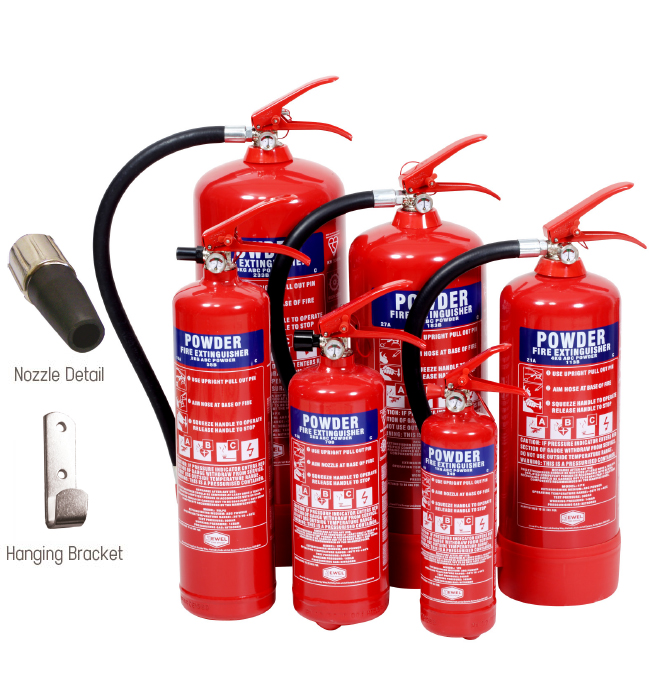
If it’s a C02 extinguisher, these can be refurbished by some companies, so contact your supplier who can arrange to have them collected and taken away for you for recycling. If it’s a Powder extinguisher, these too need to be handled with care to avoid powder spillages.
However, water mist extinguishers are different. Because they contain only de-ionised water, they can be safely discharged (in controlled conditions) before recycling the cylinder.
When in doubt, check with your local authority or your fire safety provider for specific disposal advice.
Take it to a recycling or waste centre
Most local household recycling centres and licensed waste carriers accept old fire extinguishers, an important step in recycling fire extinguishers responsibly. They’ll safely:
Depressurise the cylinder
Remove any leftover agent, and
Recycle the metal and plastic parts where possible.
Never try to puncture or dismantle an extinguisher yourself; the internal pressure can cause serious injury if handled incorrectly.
If you’re a business, use a professional fire extinguisher disposal service
Businesses have a legal duty to dispose of hazardous waste correctly. That means using a licensed waste carrier with a valid waste licence, or a professional fire safety company (like Jewel Fire Group) that offers specialist disposal for fire extinguishers.
A certified provider will:
Identify the extinguisher type,
Safely dispose of it.
Provide a waste transfer note and all other required paperwork for your records, and
Ensure the waste ends up at a compliant recycling or disposal facility.
This is the easiest and safest route, especially for sites with multiple units or different extinguisher types.
Keep disposal records (for businesses)
If you’re operating as a business or facility, you, as the original extinguisher owner, must keep disposal records, including a waste transfer note and proof that the extinguisher was handled by a certified licence holder with a valid waste licence, for at least three years.
These records prove your waste was handled by an authorised carrier and disposed of responsibly, protecting your company from fines or environmental compliance issues. It’s not just good practice. It’s the law.
In short
Proper fire extinguisher disposal is all about safety, compliance, and environmental responsibility.
Check the type, discharge safely (if allowed), use licensed handlers, and keep your paperwork in order, and you’ll be doing it right.
What’s the Deal with PFAS?
If you’ve been following the news, you’ve probably heard the term PFAS, those so-called “forever chemicals” that just won’t go away. And unfortunately, they’re not only in frying pans and waterproof jackets they’re also hiding in many fire extinguishers.
For decades, PFAS (that’s per- and poly-fluoroalkyl substances) have been used in firefighting foams because they’re incredibly effective at cutting through flames, especially on flammable liquids. The downside? They don’t break down, ever.
Once released, these chemicals can linger in soil, seep into water systems, and even build up in the human body. Over time, that means potential health risks, contaminated groundwater.
A recent BBC report highlights the growing environmental and regulatory pressure on PFAS-containing foams, a clear warning sign for businesses still relying on older foam extinguishers. (See the full report here.)
And the regulation is already here. The UK government has started phasing out PFAS-based foams, and from July 2025, several types will be banned completely.
So, if your business still uses foam and other extinguishers containing PFAS, now’s the time to act. They’ll need to be removed by the end of December 2030.
The clock’s ticking. Staying ahead of the PFAS phase-out now when your extinguishers reach end of life could save you serious costs and compliance headaches later.
PFAS-Free Extinguishers: A Step Forward, But Not a Perfect Fix
With PFAS chemicals being phased out, many manufacturers have started producing new “green” or PFAS-free fire extinguishers. These are designed to reduce the environmental impact of older foam and other models with PFAS, and while that’s a welcome step, it’s not the full solution many think it is.
Yes, these new extinguishers don’t contain PFAS, the so-called “forever chemicals” that can linger in soil and water for decades, but they still rely on synthetic firefighting agents that may be far from harmless, and they remain pressurised containers that need to be handled with extreme care.
What’s changed
PFAS is being removed, reducing long-term pollution risks.
However, the replacement chemicals are still man-made and potentially damaging to the environment.
Disposal still requires a professional waste handler, as the contents can’t simply be poured away or flushed down drains.

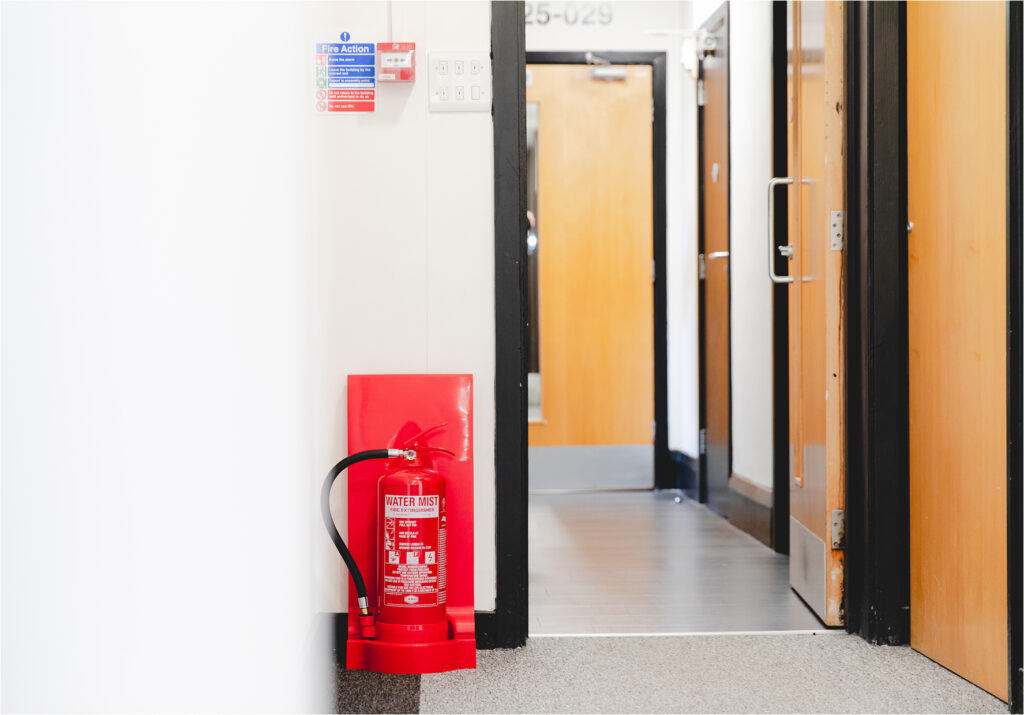

Disposal is still complex
Even though these models are branded “PFAS-free,” they still:
Contain pressurised chemicals that can’t be released without risk.
Require specialist disposal through a licensed waste carrier.
Need full documentation, including a waste transfer note, handled by a licence holder with a valid waste licence.
Must be processed in the correct manner by professionals, not general recycling services or household recycling centres.
Better, but not ideal
Going PFAS-free is a step in the right direction, but these extinguishers are still chemical-based solutions that leave behind waste and complexity. They may avoid one environmental problem, but they don’t eliminate the others. Until a fully non-toxic alternative becomes the norm, businesses using PFAS-free extinguishers will still face many of the same disposal challenges, which is why water mist fire extinguishers are increasingly seen as the smarter long-term choice.
The Easier, Smarter Option: Water Mist Fire Extinguishers
Here’s the good news: not all fire extinguishers are a nightmare to dispose of.
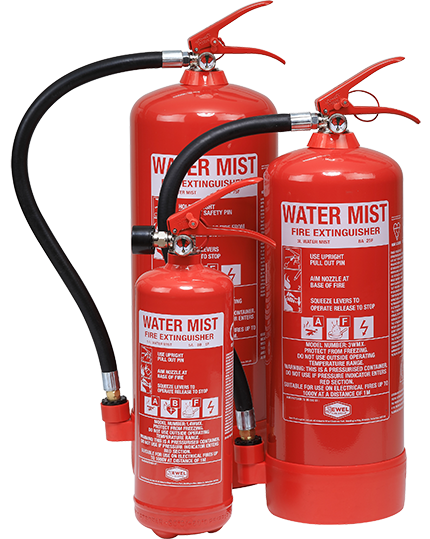
Water mist fire extinguishers, like the ones supplied by Jewel Fire Group, are the new generation of fire safety: clean, eco-friendly, and hassle-free from start to finish.
Instead of using chemical foams or powders, water mist models rely on pure de-ionised water. That means:
No PFAS.
No toxins.
No chemical waste.
So, when it comes time to retire one, disposal couldn’t be simpler:
You can safely discharge any leftover water (just check local regulations first).
The cylinder can be recycled as standard metal waste.
And there’s no hazardous media to treat or incinerate, ever.
Even better, water mist extinguishers are incredibly versatile. They can extinguish multiple fire types, including electrical and cooking fires, all without leaving behind messy residue or environmental damage.
In short, water mist extinguishers aren’t just safer for the planet. They’re easier for you, your business, and your bottom line.
When it’s time to upgrade your fire safety setup, this is the option that makes both practical and environmental sense, and Jewel Fire Group has you covered.
Why It Makes Sense to Switch Now
The clock is ticking on PFAS. As new bans and environmental rules come into force, businesses still holding on to old extinguishers containing PFAS could soon face rising disposal costs, stricter regulations, and a whole lot of unnecessary hassle.
Making the switch now isn’t just about staying compliant; it’s about future-proofing your fire safety setup.
By upgrading to water mist fire extinguishers, you’ll:
Avoid future disposal headaches — no toxic foam, no specialist waste fees.
Stay ahead of environmental regulations — meet new standards before they become a problem.
Keep your workplace safe — without the chemical risks linked to PFAS-based foams.
And when the time finally comes to replace your water mist extinguisher?
Disposal is as simple as releasing the leftover water and recycling the metal cylinder, quick, clean, and completely eco-friendly.
It’s a smart switch that saves you money, protects the planet, and shows your business is serious about doing things the right way.
The Smart Way Forward for Fire Safety
Disposing of a fire extinguisher the right way isn’t just another health-and-safety chore; it’s part of protecting your people, your business, and the planet.
With PFAS regulations tightening and disposal costs on the rise, there’s never been a better time to rethink what’s sitting on your wall. If you’re still relying on old foam extinguishers, now’s the moment to make the switch when your current extinguishers reach their end of life.
A water mist fire extinguisher gives you all the fire protection you need, without the chemical risks, disposal headaches, or environmental guilt. It’s the cleaner, safer, future-proof choice for modern fire safety.
Ready to make the change?
Visit Jewel Fire Group to explore our range of truly eco-friendly water mist extinguishers and discover how simple it can be to protect your space and the environment at the same time.


 View PDF