
How Do Water Fire Extinguishers Work? A Simple Guide to Jet, Spray, Additive & Mist
If you look around most UK workplaces, schools or apartment blocks, you’ll see a lot of red-labelled water extinguishers on the walls. They all look similar… but they don’t all work in the same way.
And if you’re responsible for fire safety, the big question is:
How do water fire extinguishers actually work, and which type is best for your building?
In this guide, we’ll break down, in plain English:
How water extinguishers put out fires
The four main types of water extinguishers:
Water Jet
Water Spray
Water with Additives (Hydro-spray / Aqua Spray)
Water Mist (Fog)
Where each shines, and where each falls short
Why one type of water extinguisher is increasingly favoured in modern buildings (and what sets it apart)
First things first: how do water fire extinguishers work?
All water extinguishers are built around one simple idea:
Take away the heat, and the fire dies.
Fire needs three things to keep going: heat, fuel and oxygen (the “fire triangle”). Water tackles the heat side:
A pressurised cylinder forces water through a nozzle
The water hits the burning material and absorbs a huge amount of heat
As the temperature drops, the fuel can no longer keep burning, so the flames die down and go out.
Standard water extinguishers are mainly used on Class A fires, those involving solid combustibles like:
Wood and timber
Paper and cardboard
Textiles and soft furnishings
Other organic materials commonly found in workplaces
They are not suitable for fires involving flammable liquids, and never assume any water extinguisher is safe on flammable liquids, electrical fires, or live electrics unless the label and datasheet explicitly say so. Always follow the fire risk assessment and manufacturer’s guidance.
With that foundation in place, let’s look at the four different types of water extinguishers you’re likely to come across.
1. Water Jet Fire Extinguishers
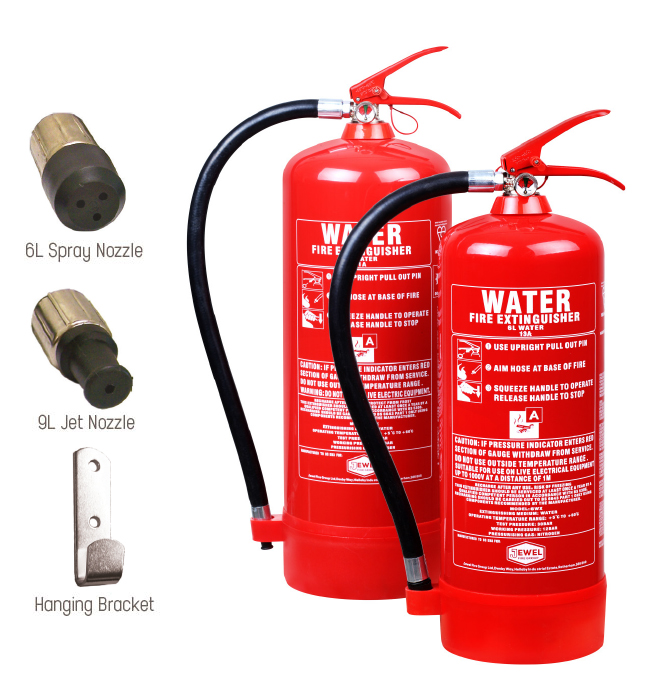
This is the classic “big red extinguisher” most people picture, usually 6 or 9 litres, with a simple hose and nozzle, and one of the most widely recognised pieces of fire safety equipment.
How a water jet extinguisher works
The extinguisher discharges a continuous, solid jet of water at relatively high pressure
The operator aims the jet at the base of the flames, sweeping side to side
The large volume of water rapidly cools the burning materials, removing heat from the fire triangle until the fire is out
Typical uses
Offices and corridors with mostly Class A risks
Schools, warehouses, public buildings with a lot of paper, furniture, wood, and fabric
Areas with no significant electrical or flammable liquid risk
Advantages
Simple and familiar, most people instinctively understand how to use a water jet
Very effective on deep-seated Class A fires, for example, a stack of cardboard or a pile of pallets
Relatively low cost to purchase and maintain
Drawbacks
Water damage: a powerful jet and lots of water can soak carpets, electrics, stock and documents
Single-risk only: generally only suitable for Class A fires, not for flammable liquids, burning oils, fires involving combustible metals, or live electrical systems
Units are often large and heavy, especially the 9-litre size, which can be harder for some users to handle
2. Water Spray Fire Extinguishers
Water spray extinguishers use a different nozzle to break water into a fine spray or cone, rather than a single solid jet.
How a water spray extinguisher works
The special nozzle disperses water into smaller droplets in a wide fan pattern
This increases the surface area of water, so it can absorb heat more quickly
The spray forms a cooling “curtain” over the fire, helping stop it from spreading and making it easier to approach safely
Typical uses
Similar environments to water jet, Class A risks in offices, schools, corridors and storage areas
Especially useful where faster knock-down is desirable and wide coverage helps (e.g. soft furnishings or wall linings)
Some models also carry additional approvals (for example, passing certain electrical conductivity tests), but you should always check the specific extinguisher’s ratings and instructions before using it near electrics.
Advantages
Faster heat absorption than a solid jet, thanks to the finer droplets
With wider coverage, the spray pattern can blanket a larger area in less time
Often, less water is needed compared to a traditional jet for the same fire rating
Drawbacks
Still primarily a Class A solution, most spray water extinguishers are not rated for flammable liquids or cooking oils
Unless clearly labelled otherwise, treat as unsuitable for live electrical equipment
Some water spray units can still cause significant water damage, especially on porous materials
3. Water Additive (Hydro-spray / Aqua Spray) Extinguishers
Water additive extinguishers, often branded as Hydrospray, Aqua Spray or similar, take the water spray concept a step further.
Here, small amounts of chemicals (wetting agents and surfactants) are mixed with the water to improve performance.
How water additive extinguishers work
Additives reduce the surface tension of water, helping it spread and soak into materials more effectively
The enhanced solution is usually discharged through a spray nozzle, creating finer droplets and good coverage
This combination can boost the cooling and wetting effect significantly; some sources quote up to a 3x increase in effectiveness compared with plain water.
Because they’re more efficient, you can often achieve the same fire rating with smaller, lighter cylinders, which is useful where manual handling is a concern.
Typical uses
Areas with mostly Class A risks, but where lighter extinguishers are desirable
Premises that want improved performance but may not want to switch to foam fire extinguishers or powder
Some additive units carry extended fire ratings, sometimes including limited Class B capability. Always check the label/data sheet
Advantages
Higher firefighting performance than plain water for the same size and weight
Often lighter and more compact, making them easier for staff and visitors to handle
Some models offer wider risk coverage than basic water, depending on approvals
Drawbacks
The added chemicals can make them less environmentally friendly than pure water or water mist solutions
At end-of-life, disposal may be more complex and costly than for extinguishers containing only water
Still not typically the best choice for sensitive areas (e.g. food prep, healthcare, heritage sites) where residues and contamination are a concern
4. Water Mist (Fog) Fire Extinguishers
Water mist extinguishers are the new generation of water-based firefighting, and they work very differently from traditional jets and sprays.
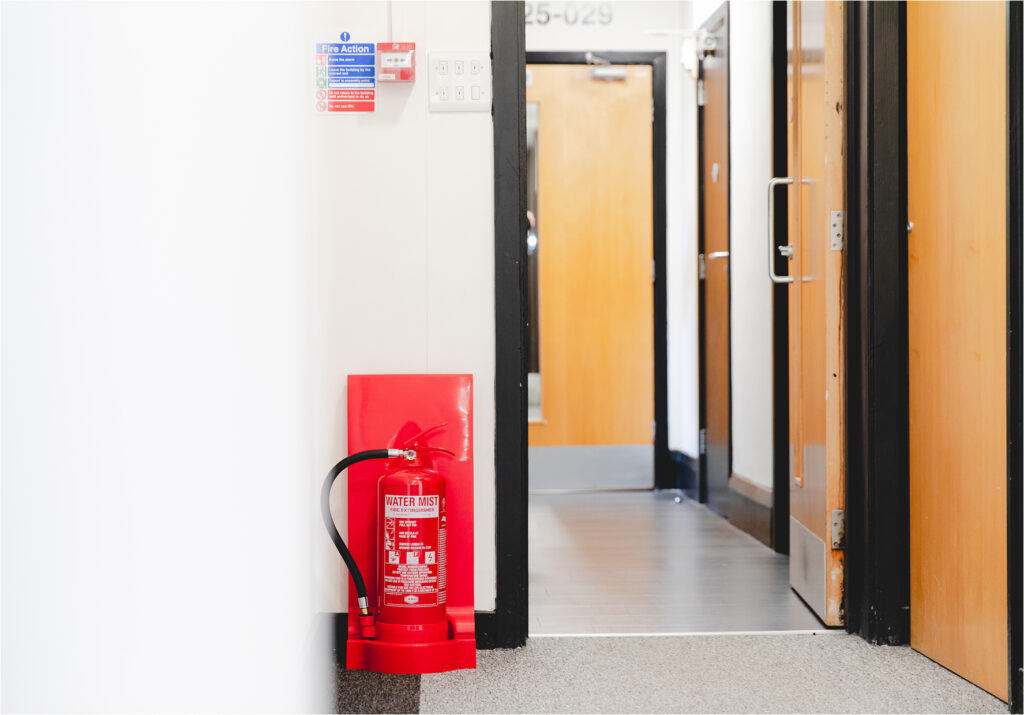
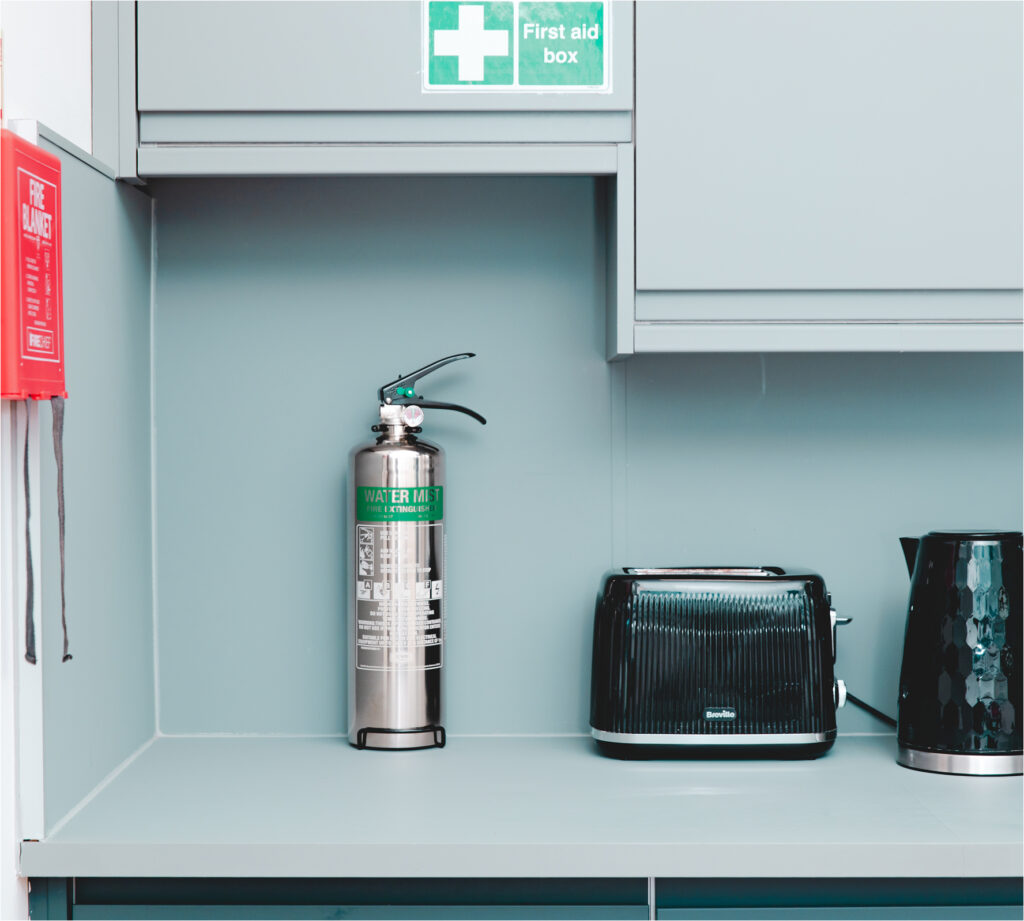
Instead of a big stream of water, a water mist extinguisher uses a specially designed nozzle to turn de-ionised water into millions of microscopic droplets (a fine fog).
How a water mist extinguisher works
When you discharge a water mist extinguisher:
Microscopic droplets are produced, far smaller than droplets from a standard spray nozzle
These droplets are drawn into the flames, where they evaporate rapidly
The evaporation process absorbs huge amounts of heat, cooling the fire source
The resulting steam displaces some of the oxygen around the fire, helping to suffocate it
The mist also forms a “curtain” between the user and the fire, reducing radiant heat and improving visibility and safety
Because the droplets are so small, they don’t gather into big pools of water, so you get intense cooling with very little collateral damage.
Many water mist units use de-ionised water with no additives at all, ensuring the agent is non-corrosive, non-toxic and more environmentally friendly.
Typical uses
One of the biggest selling points of modern water mist extinguishers is their multi-risk coverage. Depending on the specific model and certification, they can be suitable for:
Class A fires – solid combustibles such as wood, paper, textiles
Certain Class B fires – some flammable liquids
Class F fires – cooking oils and fats in kitchens
Live electrical equipment (up to specified voltages) when de-ionised water and appropriate tests are in place
That means they’re ideal for:
Offices and schools
Hotels, Airbnbs and student accommodation
Hospitals and care homes
Catering environments and open-plan kitchens
Public transport, caravans, boats and many more sectors
Advantages
Truly multi-purpose
The right water mist extinguisher can cover many of the main fire risks in a modern building, Class A, B, F and electrical, reducing the need for multiple different extinguisher types on the same wall.
That simplifies:
Fire points and signage
Staff training (“one main extinguisher, many risks”)
Ongoing maintenance and compliance
Minimal damage and residue
Because the droplets are so fine and there are no foams or powders, water mist:
Uses much less water than a traditional jet for the same effect
Leaves no sticky residue on equipment, furnishings or stock
Reduces clean-up time and business downtime after a small incident
This makes mist particularly attractive in:
Server rooms and IT spaces (alongside other appropriate protection)
Healthcare and care environments
Heritage buildings, museums and galleries
High-value retail and hospitality spaces
Safer around people & electrics
With de-ionised water and tiny droplets, properly tested water mist extinguishers:
They are non-conductive in normal use, so they can be deployed on fires involving live electrical equipment within their rated limits
Create a cooling barrier, reducing the heat felt by the user
Help to knock down smoke, improving visibility during evacuation
Greener and easier to own
Because there are no additives or harmful chemicals in the agent:
The extinguisher is more environmentally friendly than many foams and some additive-based waters
End-of-life disposal can be simpler and cheaper
In some ranges, cylinders are designed to be refilled on site, further reducing waste
Drawbacks
Like any technology, water mist isn’t “perfect” for every scenario.
Initial unit cost can be higher than a single basic water or foam, although this is often offset if your firepoint includes a c02 for electrical risks and by lifecycle and training savings.
Like all water-based extinguishers, they can freeze if used outside in low temperatures
As with any extinguisher, you must still ensure it’s correctly sized and located for the specific risk
For very large or unusual hazards, you may still need specialist systems (e.g. fixed suppression, gaseous agents, specialist powders)
So… which water extinguisher is best overall?
Let’s compare them at a glance:
Water Jet – robust, simple and effective on Class A, but heavy and can cause significant water damage.
Water Spray – faster cooling and wider coverage, but still mostly Class A and still water-heavy.
Water Additive – boosts performance and reduces size/weight, but introduces chemicals and more complex disposal.
Water Mist – extremely fine droplets, multi-risk capability, minimal residue, de-ionised water and outstanding versatility.
If your building only has a very narrow, simple risk, say a store room with nothing but paper and timber, a traditional water jet may still do the job.
But most real-world environments today are mixed-use: laptops on desks, upholstered furniture, cooking appliances, small amounts of flammable liquids, visitors, residents and staff all sharing the same spaces.
In that context, modern water mist extinguishers stand out as the best all-round option because they can:
Cover multiple fire classes (including many A, B, F and electrical risks) with one extinguisher type
Drastically reduce collateral damage, clean-up time and downtime after a discharge
Support simpler training, staff don’t need to memorise a wall of different colours and media
Offer a genuinely greener solution, especially when they use de-ionised water with no additives
Why Jewel Fire Group backs water mist, and what that means for you
At Jewel Fire Group, we’ve invested heavily in E-Series Water Mist technology precisely because of these advantages.
Our range is designed to:
Use pure de-ionised water, no chemical additives, for a cleaner, greener agent
Provide a multipurpose solution that can deal with many common fire risks across modern buildings
Minimise damage and disruption when an extinguisher is used
Make life easier for fire risk assessors, installers and end users, fewer types on the wall, clearer guidance, easier training
Of course, every site is different, and your final selection should always be based on a competent fire risk assessment and relevant standards. But if you’re looking to future-proof your extinguisher provision, reduce complexity and support your sustainability goals, water mist is a technology well worth building your strategy around.
Ready to explore water mist for your premises?
If you’re reviewing existing water jets, sprays or additive extinguishers and want to:
Cut the number of different extinguisher types on site
Make training simpler for staff and residents
Reduce clean-up and damage after any discharge
Move towards a cleaner, additive-free solution
…then it’s the perfect time to look more closely at Jewel Fire Group’s E-Series Water Mist range.
You’ll be able to see how this technology can replace multiple extinguishers with a single, safer, greener option, without compromising on performance where it matters most.

 View PDF